One of the most relevant characteristics of materials exposed to hydrogen, together with their susceptibility to embrittlement, is hydrogen permeation. One of the most widely used strategies for the design of storage tanks, distribution pipelines and, especially, for the conversion of existing infrastructures, is the application of barrier coatings against hydrogen permeation.
One of the main research focuses of TEKNIKER within the ONZTHI II project is the development of advanced coatings capable of reducing or delaying hydrogen permeation in metals exposed to pressurized hydrogen atmospheres. To evaluate their effectiveness, the so-called Permeation Reduction Factor (PRF) is determined, and the typology of hydrogen traps present both in the base material and in the applied coatings is characterized.
This process requires the development of a robust and reliable characterization methodology. One of TEKNIKER’s objectives is the creation of a harmonized methodology that allows the identification of the number and type of hydrogen traps — both reversible and irreversible — in metallic materials, which can later be scaled up to the study of coatings.
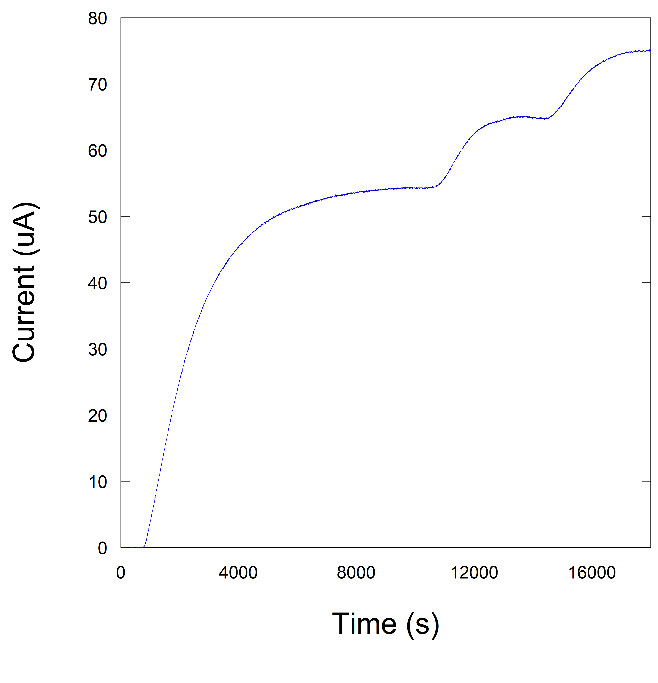
For permeability characterization using electrochemical techniques, a double Devanathan-Stachurski electrochemical cell is used, following the ISO 17081 standard. Both cells have a three-electrode configuration: a reference electrode (RE), a counter or auxiliary electrode (CE), and a working electrode (WE), which corresponds to the sample under study.
This same experimental configuration is being used for the identification and analysis of hydrogen traps through two complementary strategies: consecutive transients and transient-decay techniques. The developed methodology allows:
- Eliminating transient effects associated with the surface.
- Obtaining diffusion coefficients representative of the material.
- Analyzing the presence of reversible and irreversible traps.
- Differentiating between apparent diffusion and effective diffusion.
- Evaluating the microstructural stability of the material and the coatings.
- Analyzing the reliability and reproducibility of the tests.
In the coming months, this methodology will be applied to coatings developed using PECVD technologies, with the aim of characterizing their barrier effect against hydrogen permeation and advancing solutions that contribute to a safer and more efficient energy infrastructure.