GAIKER Technology Centre continues to strengthen its research in advanced materials and sustainable processes through the incorporation of state-of-the-art characterisation technologies. In this context, a multimodal characterisation system was launched in 2025, integrating a Dynamic Mechanical Analysis (DMA) module and a Dielectric Analysis (DEA) module equipped with UV irradiation. Both instruments are aimed at studying photopolymerisable sustainable resin formulations intended for 3D printing of hollow structures acting as liners for high-pressure gaseous hydrogen storage.
DMA enables the evaluation of the viscoelastic response of materials under cyclic mechanical stress applied at different temperatures and frequencies. This information is key to determining properties such as storage modulus, loss modulus and glass transition temperature — data essential to ensuring the mechanical integrity of liners during the thermal cycles associated with hydrogen loading and unloading.
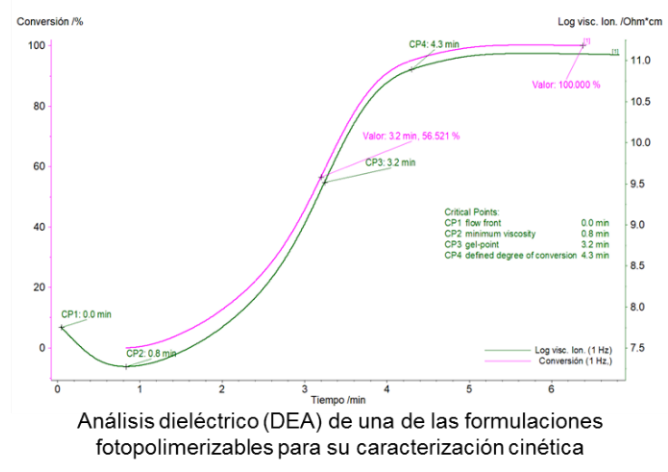
Dielectric Analysis (DEA), in turn, allows the study of the reaction kinetics of the developed formulations under different ultraviolet radiation conditions, enabling the correlation of cure progression with the mechanical properties obtained via DMA. In addition, the data obtained provide information for defining the optimal processing conditions for 3D printing.
The multimodal system therefore allows analysis of the reaction kinetics of the developed formulations under different UV radiation conditions, as well as correlation of their mechanical behaviour as a function of temperature — a critical aspect given the thermal cycles to which hydrogen tank materials are subjected during gas loading and unloading stages.
With this new infrastructure, GAIKER consolidates its research capacity in the development and validation of advanced resin formulations, contributing to technologically innovative, efficient and sustainability-driven solutions in the field of polymeric materials.
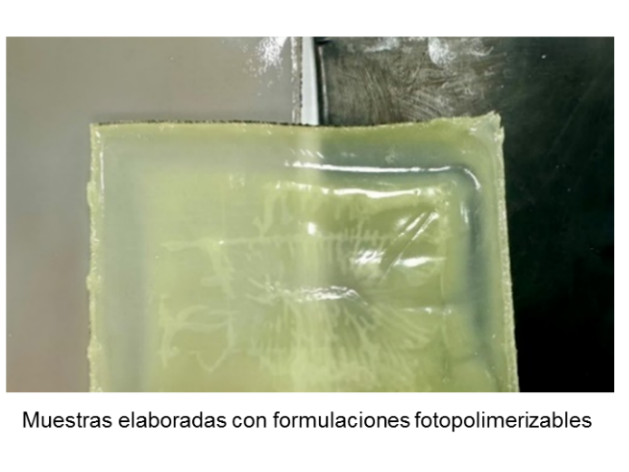
GAIKER has initiated the development of UV-curing formulations with recyclable reactive resins for the production of 3D-printed structures, along with kinetic characterisation activities and assessment of the mechanical performance of DLP/LCD 3D printing resins.