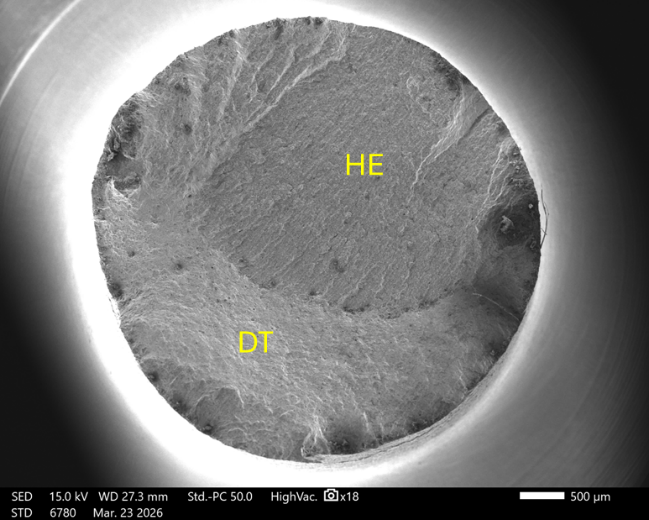
Vacuum coating deposition using Magnetron Sputtering technology opens new possibilities for protecting metallic components against hydrogen. Within ONTZHI-II, TEKNIKER is working on the development of chromium nitride (CrN) coatings and Cr/CrN adhesion interfaces obtained by the HiPIMS (High Power Impulse Magnetron Sputtering) technique. This technique has been chosen to increase densification and improve surface coverage of the coating, with the aim of reducing hydrogen permeation and increasing the fatigue resistance of components coated with DLC (Diamond-Like Carbon) type a-C:H under pressurised hydrogen conditions.
HiPIMS: high-performance deposition technology
HiPIMS is an advanced variant of magnetron sputtering in which power is delivered to the magnetron through high-power pulses. This generates a high-density plasma with a greater presence of ionised species, enabling the deposition of denser, more adherent and more homogeneous coatings than those obtained by conventional sputtering processes.
Five configurations tested: the key role of the gradient
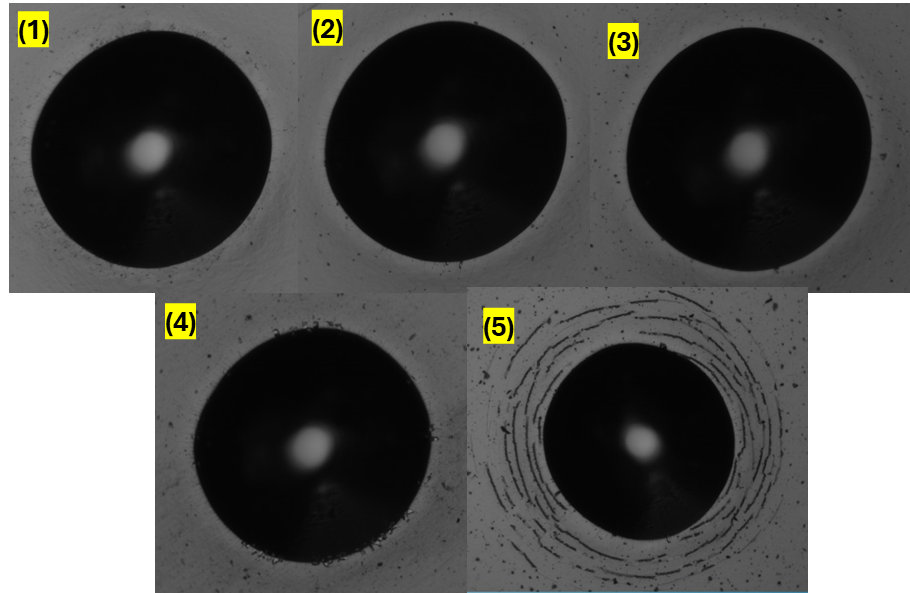
During the first annual period, TEKNIKER deposited and characterised different configurations of Cr-CrN coatings, varying the amount of nitrogen introduced in the process and the use or absence of a gradient in the deposition. Coatings 1–3 incorporate an initial chromium interlayer deposited at higher pressure, followed by a descending gradient in pressure and HiPIMS pulse conditions. This progressive transition seeks to reduce interfacial stresses and improve compatibility with the substrate. Coatings 4 and 5, in contrast, deposit chromium directly under the final conditions, without a gradient.
Adhesion test results (Rockwell-C and scratch test) reveal a clearly superior performance in gradient coatings: systems 4 and 5, which are more compact but lack a gradual transition, show poorer adhesion performance. This result confirms that coating density is not the only determining factor: interfacial architecture and stress management play an equally important role.
Crystallographic characterisation: formation of CrN and Cr₂N phases
X-ray diffraction (XRD in grazing incidence configuration) has enabled identification of the crystalline phases present in each coating. Results show predominant CrN formation across all configurations, with (111), (200), (220) and (222) orientations. However, under low nitrogen flow conditions — particularly in coating 5 — an increase in the secondary Cr₂N phase is observed, which according to the literature shows inferior performance as a barrier.
Permeation tests: barrier effect confirmed
One of the most significant results of this first annual period is the experimental confirmation of the barrier effect of CrN coatings against hydrogen transport. Electrochemical permeation tests carried out in a Devanathan-Stachurski cell show:
• A significant reduction in permeation current in the coated systems compared to the uncoated substrate.
• An increase in the permeation breakthrough time, indicating that the coating delays hydrogen penetration.
• The gradient system (CrN 1) shows better barrier performance than the non-gradient system (CrN 4), with notably lower current values.
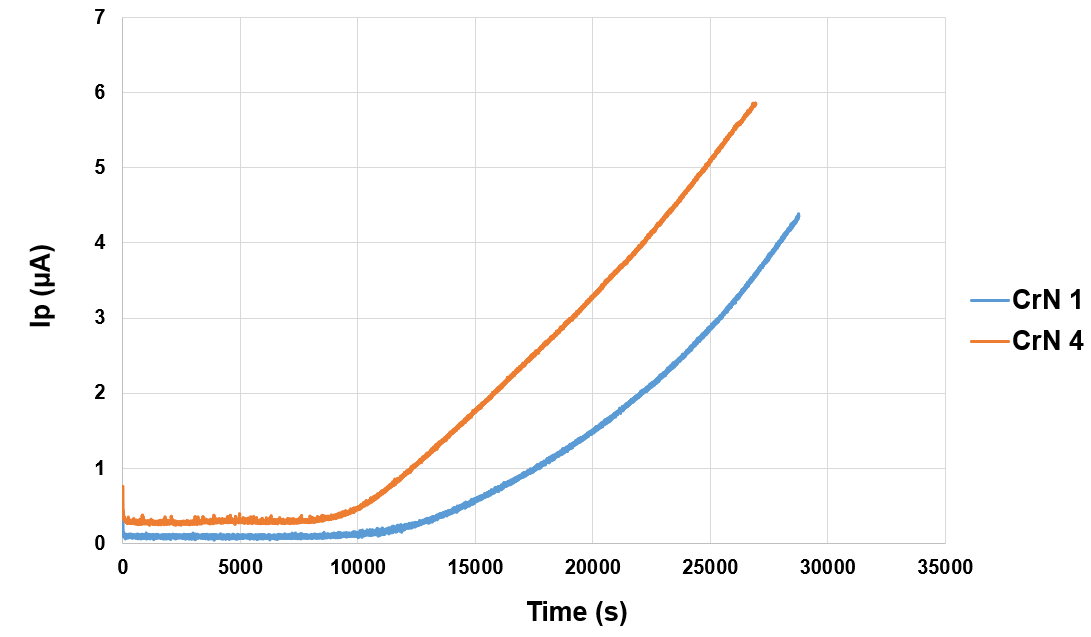
The results are considered preliminary, as saturation was not reached within the test duration (≈8 hours) in any of the cases. During the second annual period, test times will be extended to obtain reliable quantitative parameters, including the Permeation Reduction Factor (PRF).
Download the full report with all results and analysis here: